


 35 / 114

[
] 33
Industry and Trade, Cooperatives and Small and Medium
Enterprises found that lack of access to markets, networking
and skills training opportunities significantly impeded the
ability of women to start and run their own businesses. To
address these challenges, these ministries have joined hands
to sponsor domestic and international trade fairs to promote
the products of women-led businesses, provide sector-specific
training programmes, and develop incubators for innovative
business models. These measures will go far in helping to build
a vibrant entrepreneurial ecosystem for women in Indonesia.
In the Philippines, a national law has been implemented that
requires each ministry to allocate a minimum of 5 per cent
of its annual budget to projects addressing gender concerns.
Implementation of gender-responsive budgeting over the past
two decades has resulted in a number of progressive policy and
legal measures promoting equal opportunities for women and
girls. The implementation of these policies contributed to the
Philippines ranking seventh out of 145 in the World Economic
Forum’s Gender Gap Index 2015. As the highest ranked Asia-
Pacific country, the Philippines has made considerable progress
in closing gender gaps in health and survival, educational attain-
ment, economic participation and political empowerment.
In China, to enhance rural women’s access to credit and
financial services, a state-subsidized interest-free loan
programme was jointly launched in 2009 by the Ministry of
Finance, Ministry of Human Resource and Social Security,
People’s Bank of China and the All-China Women’s Federation.
Benefiting from loans totalling US$42 billion issued over the
past seven years, more than 5 million women have been able
to start or expand their businesses and thereby create employ-
ment opportunities for millions of women in China.
Promoting women’s entrepreneurship
Asia and the Pacific is the engine of global economic growth
and home to the world’s fastest growing economies. Small and
medium-sized enterprises (SMEs) are the backbone of this
growth, accounting for on average 96 per cent of all enter-
prises and over 60 per cent of the national labour force in the
region.
9
Women-owned SMEs are a critical component in this
landscape and they have enormous potential to contribute to
economic growth, particularly in emerging markets.
To support the creation of SMEs through female entrepre-
neurship, ESCAP has been working with governments and
other stakeholders in the region to foster the adoption of legal
and regulatory measures that remove barriers to women’s
entrepreneurship. Our policy work aims to:
• address discriminatory social norms and ensure gender-
responsive policy in SME development and promotion
• engage financial institutions to increase women’s access
to credit and financial services, and develop standards for
fair and equal treatment of women applicants
• enhance women’s access to market information, social
networks and services through harnessing access to ICT.
Of these policy areas, we as a region must urgently work
together to enhance women’s access to ICT in particular.
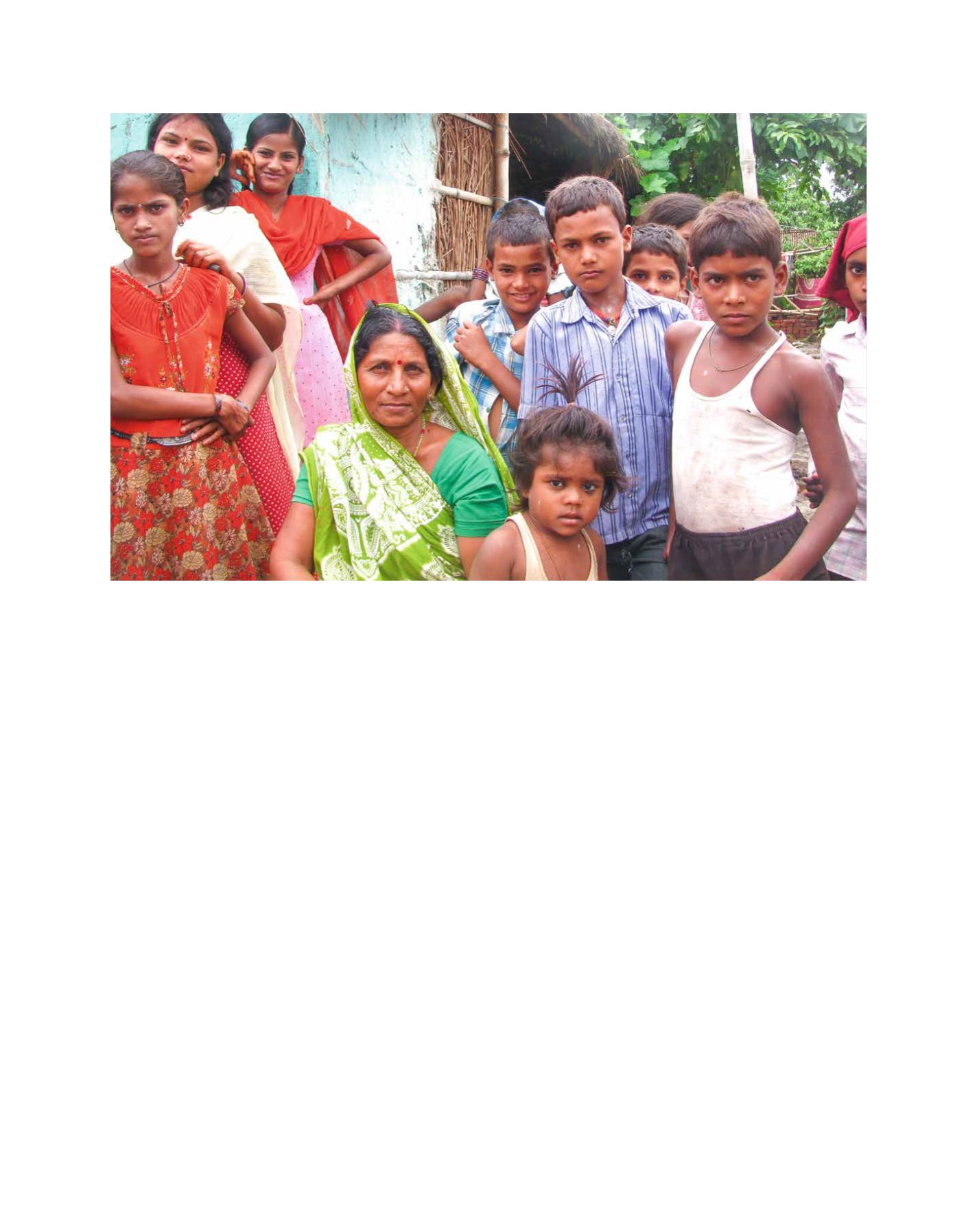
Electricity and light from a local biomass plant have improved this family’s quality of life in Badhai, Punjab
Image: Mari Sawai/ESCAP
G
ender
E
quality
and
W
omen
’
s
E
mpowerment