



 70 / 74

[
] 68
A B
et ter
W
or ld
mass of consumers and producers. AMDC has adopted this
regional value chain approach in work in SADC as well, and
will involve it as a key tenet of future CMV engagements.
Identifying and addressing IFFs in the mineral sector
AMDC has been enhancing the groundbreaking Mbeki
High Level Panel work on IFFs, which noted the more than
USD 50bn which illicitly leaves Africa annually. Work by
AMDC notes that over half of these IFFs are driven by the
extractives sector. Specifically, two recent reports have shed
light on the types of fiscal regimes across Africa, how these
contribute to IFF and transfer mispricing issues, and solu-
tions including regional fiscal harmonization. Many African
countries continue to employ contractual approaches to
mineral taxation, wherein tax measures imposed can vary
contract-to-contract. Rather, licensing systems should be
pursued in which tax and royalty laws are uniformally
applied, reducing chances for undue exceptions and exemp-
tions. Fiscal regimes across countries remain incoherent and
inconsistent, allowing multinational corporations to exploit
these disparities, triggering a race-to-the-bottom through
overly compensatory contracts. Fiscal harmonization,
particularly through alignment and streamlining of policies,
allows African countries to coordinate while recognizing
the specificities of their own fiscal regimes which might be
glossed over by complete uniformity. While regimes have
largely relied on mineral-specific ad-valorem royalties due
to the ease of implementation, these can be regressive and
not sensitive to market conditions, as opposed to profit-based
regimes which, while complex to administer, do capture the
state of profits. In order to assist member states in onboard-
ing these recommendations, AMDC has taken part in hosting
training workshops, for example on identifying and address-
ing transfer pricing issues as well as on contract negotiation.
Cross-sector institutional harmonization for AMV onboarding
In engaging with and supporting member states, a key issue
that has emerged is the need to define or, in some cases,
re-structure the institutional framework governing economic
transformation. While mineral policy may be narrowly inter-
preted as applying only to the mining sector, the approach
of the AMV encourages government and non-government
stakeholders in mining, industry, trade, environment, labour
and other sectors to come together and find realizable solu-
tions and ideas. Indeed, transformation can be achieved by
no one actor alone. In this regard, efforts towards transfor-
mation, compliance with the SDGs, AU Agenda 2063 and
other initiatives can be harmonized. Only through concerted
efforts from the highest level of policy making can resources
be galvanized and coordinated in order to finally make the
major push towards a socioeconomic transformation of the
role of minerals in Africa.
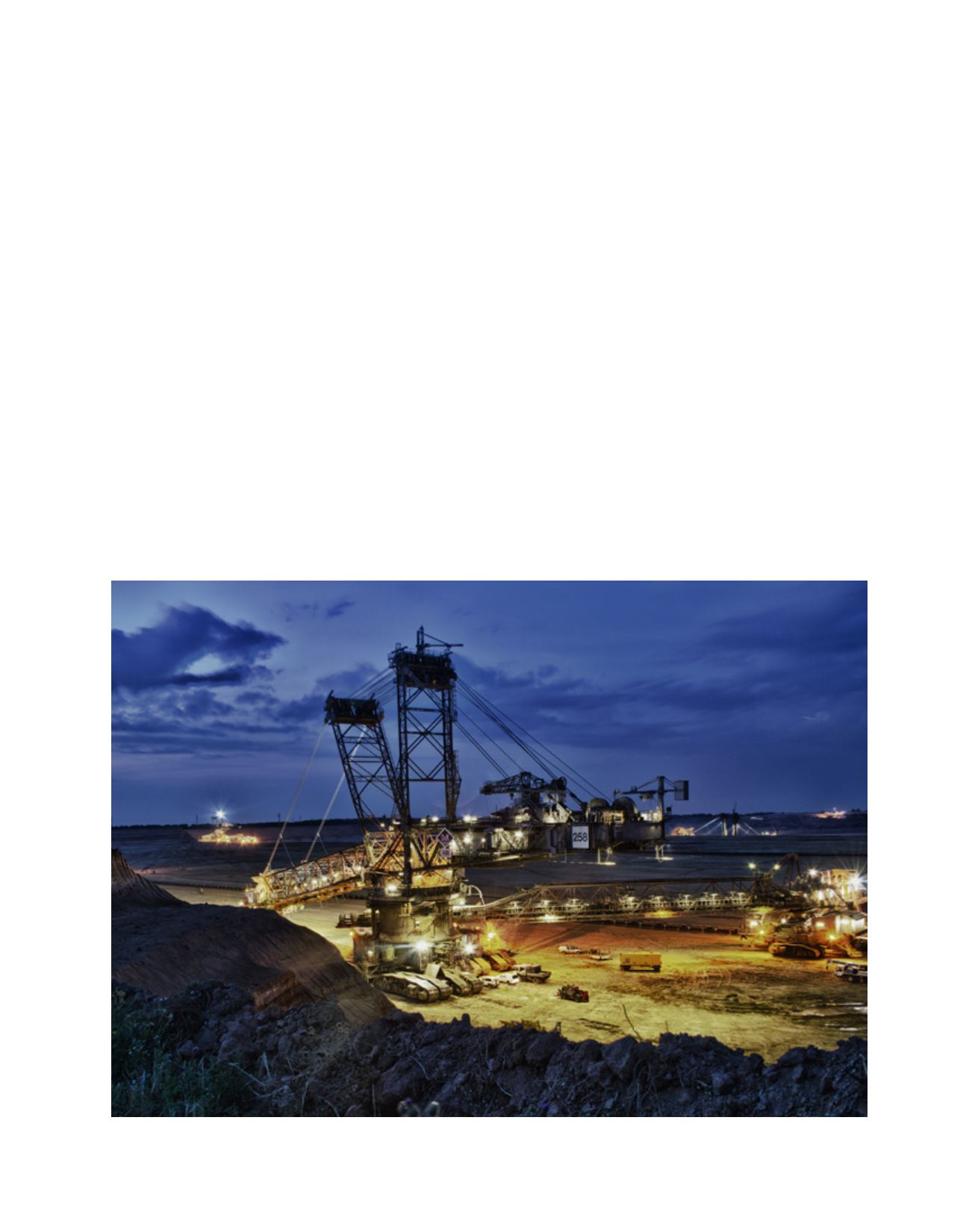
A mining excavation site