


 72 / 74

[
] 70
A B
et ter
W
or ld
renovation of the community hall which was in a dire state
of repair. Another project involved water distribution in
Ampara, a very rural district. The project was inaugurated
under Phase Two of the
Gammadda
movement for the people
who did not enjoy the simple privilege of consuming drink-
ing water. The project will include the installation of two
tube wells to facilitate drinking water.
The
Gammadda
brought relief to the development of
educational infrastructure in Yaya-26, a rural village in
Polonnaruwa that has been neglected for years. The dilap-
idated main hall of the Mahasen Vidyalaya village was
renovated. The hall was built over 40 years ago and was
the third building of the school and the only place where
students could practice their skills. The project was carried
out with the participation of accomplished architects, build-
ers, and engineers who provided advice free of charge, and
was completed within two months. Its main sponsor was one
of the regional monks associations.
These programmes are very important for the country’s
development. Even though these are not initiated by the
government, they are worthy examples of people’s participa-
tion in the decision-making process in Sri Lanka. It proves
that even private sector organizations can carry out this kind
of participatory enhancement for the hope of a better world
and that it does not have to be a responsibility of government.
The
Gammadda
programme has been introduced to raise
a rural voice in the decision making processes but it also
draws the attention of government policy makers towards
people’s comments and ideas when making and implement-
ing policies. This is the best way of stimulating awareness of
rural villagers’ problems and issues in order to make deci-
sions to fulfil their needs and wants. Those problems may
be common to everyone but some issues might differ from
one person to another according to geography, nationality,
religion and gender. Therefore, when the government makes
a decision, there should be a proper mechanism to fulfil the
relevant parties’ expectations in a successful manner.
The group director of the Capital Maharaja Organisation,
Chevaan Daniel, reminded us that the
Gammadda
programme
is made possible only with the help of the people and other
institutions that have joined hands with News 1st to take
the projects forward. Mr Daniel comments: “We did not
commence this as a result of being influenced by any politi-
cal notion in mind. There was initially a need to find out
about the issues faced by the people and their day to day
life. Thereafter, we filed reports of the people’s accounts. The
grievances of the people were later compiled and shared with
the state and international community. We decided not to
reiterate about what we don’t have but to work towards it.”
2
The importance of peoples’ participation in the govern-
ment decision making and project implementation stages is
evident. Engaging the public in decision making serves to
educate both citizen and policy makers about the various
factors of a particular decision or issues from a variety of
perspectives. It also makes the successful implementation
of a decision or policy more likely and builds trust among
them as well as helps to build accountability for both policy
makers (politicians and administrators) and beneficiaries
(citizens). Finally It helps to achieve the best outcomes of
the decision making process for a better world.
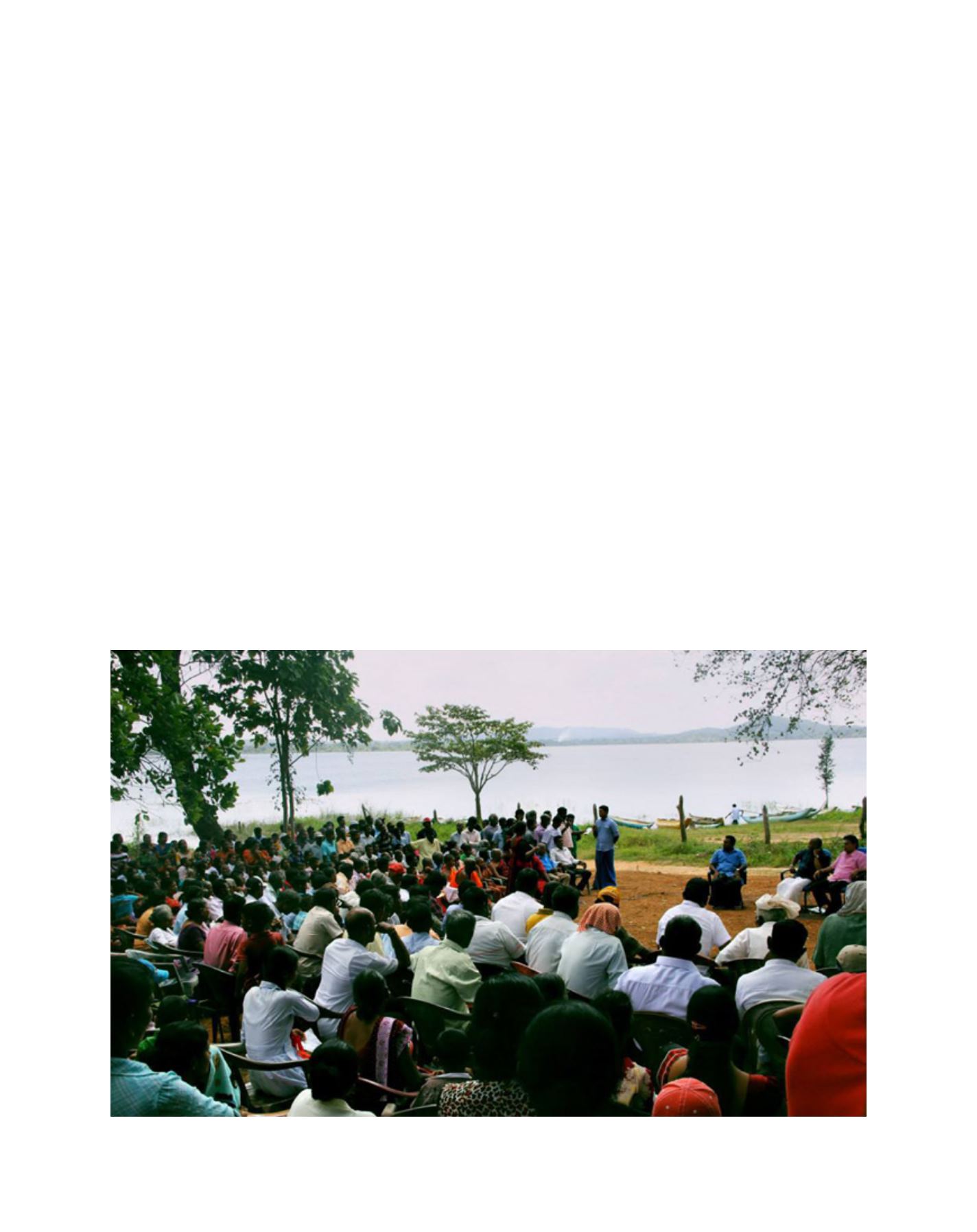
A village council conducted by a Gammadda programme to gather people’s ideas and problems
Image: Sirasa Tv gammadda programme and News 1st team