


 55 / 74

[
] 53
J
ust
, P
e aceful
and
I
nclusi v e
S
ocieties
Fostering closer engagement with NGOs –
networking in the development process
Ndinda Kioko, Communications and Advocacy Consultant, Network for Empowered Aid Response (NEAR)
S
ince the adoption of the 2030 Agenda for Sustainable
Development, the consensus towards the realization of
the Sustainable Development Goals (SDGs) has been
that local and national communities, civil society, and govern-
ments must be at the centre of all efforts. The UN Roadmap
for Localizing the SDGs states: “while the SDGs are global,
their achievement will depend on our ability to make them a
reality in our cities and regions.” This statement echoes the
vision of the Network for Empowered Aid Response (NEAR),
a platform for local and national NGOs in Africa, Asia, the
Middle East, and Latin America, who are working to reshape
the top-down humanitarian and development system to one
that is locally driven and owned, and is built around equita-
ble, dignified and accountable partnerships.
For NEAR, a sustainable future is one that is imagined first
by recognizing the failures of the current system. Countries
like Nepal and Liberia are glaring reminders that a top-down
approach is unfit if the growing, complex humanitarian and
development needs of the 21st century are to be effectively
met. The 2016 World Humanitarian Summit (WHS) recog-
nized the need for a shift towards a localized approach,
affirming that “national and local actors, including women
and women’s groups, should be engaged, capacitated and
funded,” and that “people affected by crises or living in situ-
ations of risk are rights-holders who must be put at the centre
of decision-making processes.”
While there is unfailing support for roadmaps that recog-
nize the need for this shift, there is a danger of ‘localization’
becoming nothing but an abstraction. The onus is therefore
on all actors – local, national and international – to not only
commit to reshaping the aid system, but also define what a
different future looks like, actively put in place mechanisms
that prioritize local communities, and earnestly monitor the
progress towards this future.
For NEAR, this future is one where equitable and dignified
partnerships exist, and where local communities have the
capacity, resources, and agency to address the challenges they
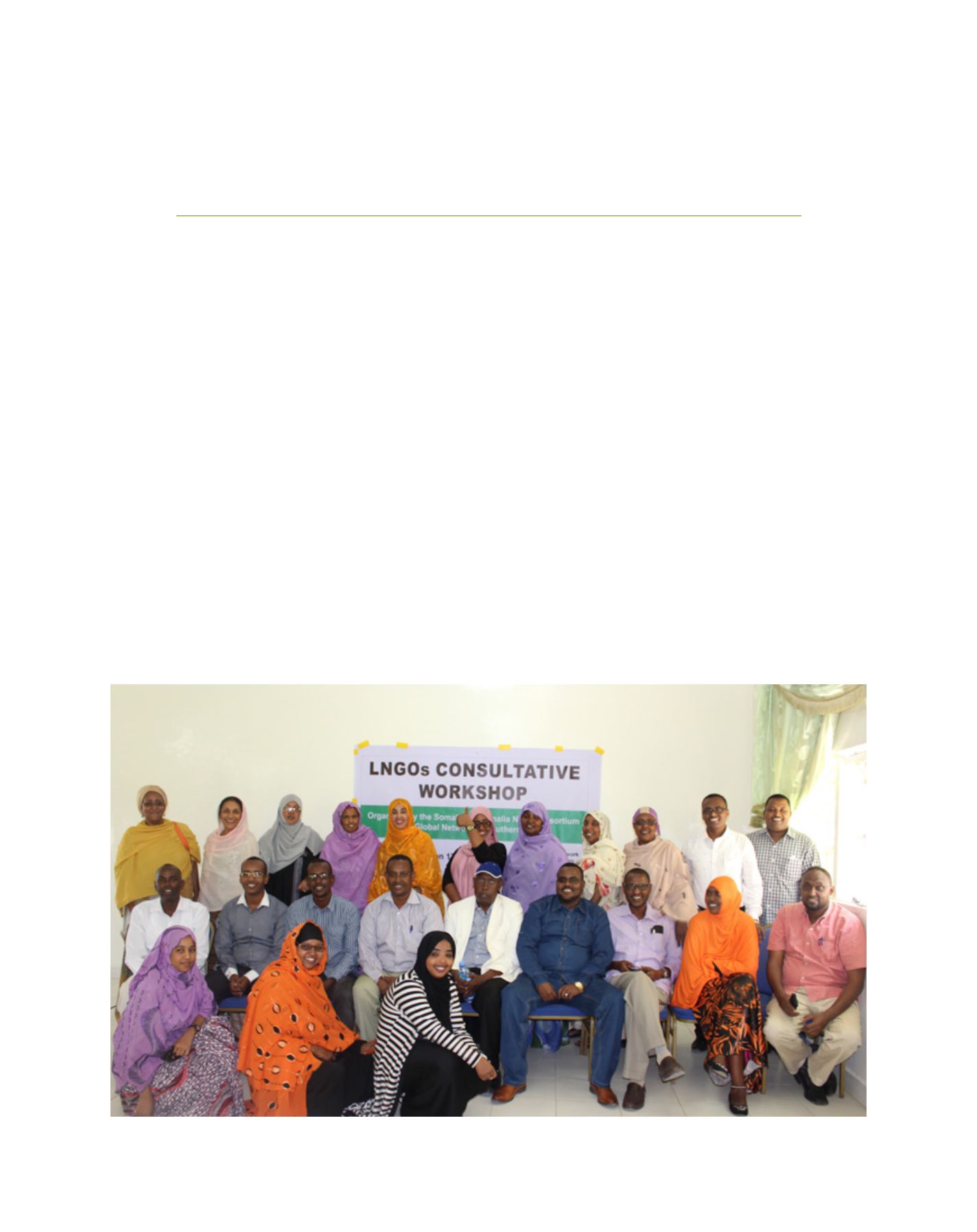
Members of local and national NGOs during a consultation meeting in Hargeisa, Somaliland