


 13 / 74

[
] 11
J
ust
, P
e aceful
and
I
nclusi v e
S
ocieties
allocations, to “accelerate” progress by clearing bottlenecks
that hamper progress and focusing resources on priority
areas for maximum impact, and to draw on “policy support”
to place the skills and expertise available from the different
parts of the UN system at the disposal of national actors in
developing countries.
The current international development framework reflects
the need to have effective and resilient institutions, but also
to empower people, in every part of society, to engage with
both state and non-state institutions, to understand and claim
their rights, and obtain the services that vindicate them.
Achieving the extremely ambitious 2030 Agenda requires
a massive and coordinated effort on the part of all people, in
every part of society and involving communities and devel-
opment actors in both the public and private sectors and civil
society. UNDP’s focus has always been on empowering those
most at risk of being left behind – women, youth, persons
with disabilities, indigenous persons and other vulnerable
and marginalized groups – so that they may participate in
development processes, influence the decisions that affect
their lives, articulate their needs, hold governments account-
able for delivering services which meet those needs and
contribute to the collective wealth of their societies.
For example, UNDP worked with UNV to launch a
‘2030 Youth Force’ in the Asia-Pacific: a regional network
to empower young people to engage with the SDGs, and to
advocate for a stronger role for young people in formulating
national policies. In Morocco, UNDP facilitated a national
consultation which enabled digital entrepreneurs, youth,
civil society activists, celebrities, and journalists to jointly
define a vision for their society, and their respective roles in
supporting its realisation. In Viet Nam, UNDP supported the
development of the Public Administration Performance Index
(PAPI) to enable people and the government to measure
progress towards the SDGs.
11
In Brazil, UNDP partners with
the National Confederation of Municipalities (NCM) to raise
awareness of the SDGs, integrate them into local plans, and
develop monitoring and accountability systems to ensure
that they are implemented.
12
Conclusion
The inclusion of a Goal on peaceful, just and inclusive socie-
ties is timely and necessary to address the root causes of
poverty, violence, inequality and exclusion that exist in all
societies to varying degrees and that affect particularly the
poorest and most vulnerable people in our communities.
The more a society provides opportunities for different
groups to peacefully exchange their views, the greater the
chance of enjoying trust in institutions and respect for diver-
sity in opinion, faith, culture and lifestyles.
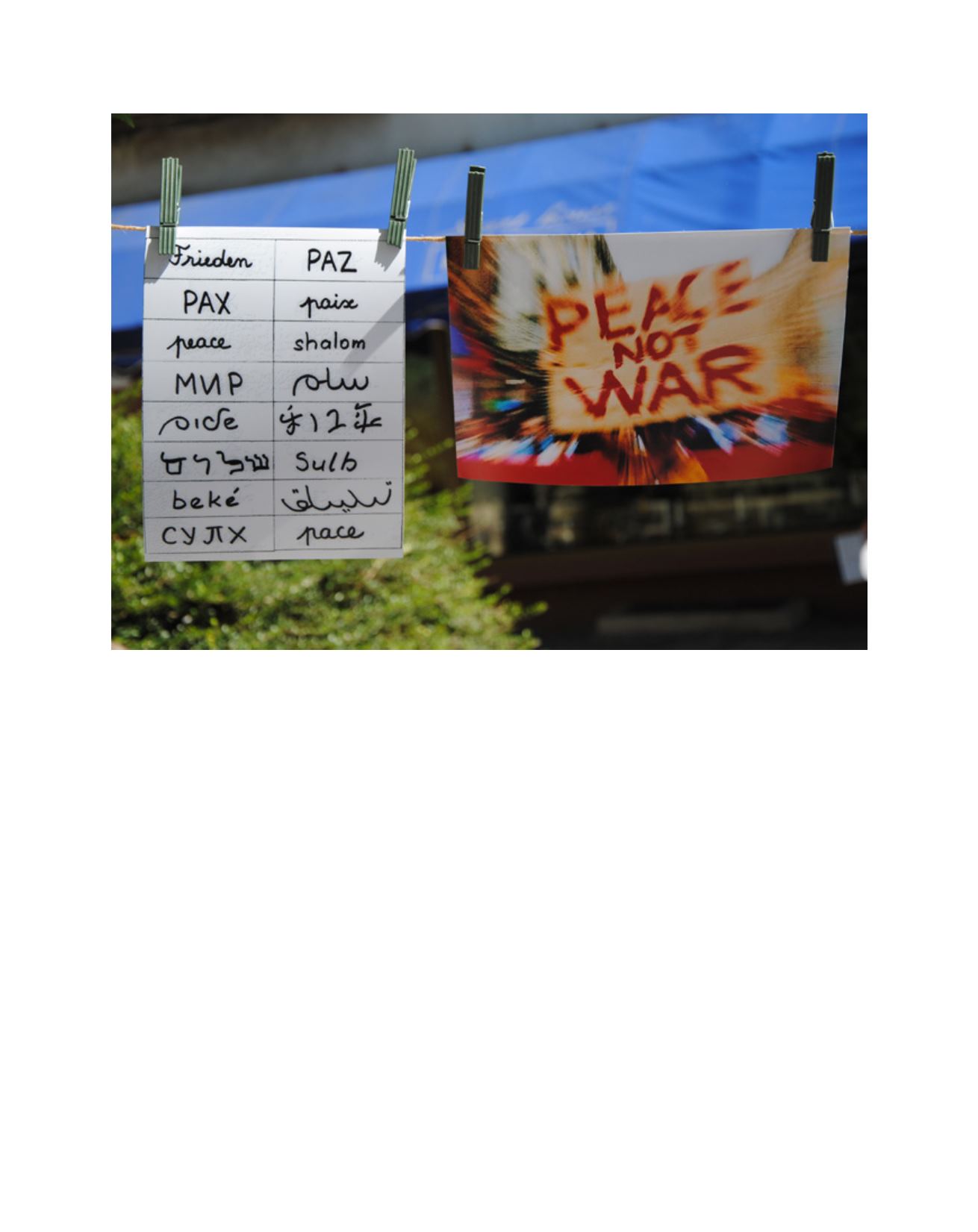
Peace Day, Serbia, 2010
Image: UNDP