


 27 / 74

[
] 25
J
ust
, P
e aceful
and
I
nclusi v e
S
ocieties
Protecting and defending the vulnerable –
direct action and legislation on domestic
violence and child maltreatment
Dr Maha Almuneef, Executive Director; Ms Sarah S. Inam, Project Manager, National Family Safety Program
T
he National Family Safety Program (NFSP) was set
up to become a leading institution in the combat of
domestic violence (DV) and child maltreatment (CM).
It was initiated in the Kingdom of Saudi Arabia by a royal
decree in 2005 and began its work with four employees,
blossoming over the years into a thriving organization with
over 60 employees. Its main focus is prevention, differentiat-
ing it from other organizations in the kingdom that are more
focused on providing protection services to victims of abuse.
While the NFSP recognizes the significance of providing
services to victims, it believes strongly that prevention is as
important in combating the problem of DV.
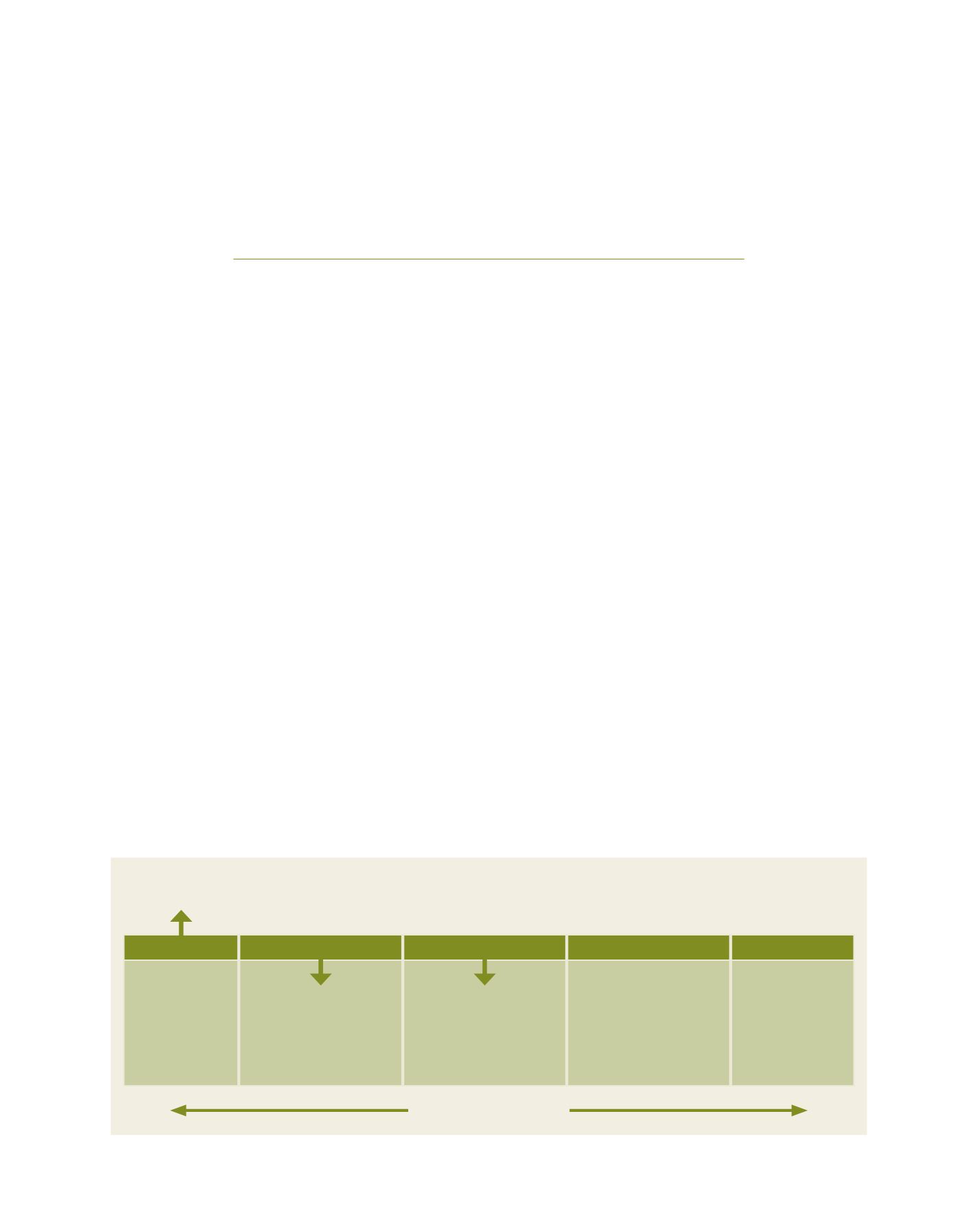
The history of child abuse and neglect (CAN) in Saudi Arabia
can be divided into five eras: the first extends from 1990 to 2000
and may be referred to as early detection of maltreatment cases.
The second era spans from 2000–2004 and saw the national
recognition of CM become a public health issue. The third era,
2005–2010, marks the flourishing of governmental and non-
governmental organizations. The fourth era, 2011–2015, is
characterized by the enactment of laws, and the fifth, from 2016
onwards, sees the implementation of prevention programmes.
It could be argued that the official development of child
protection started in the year 1990 when the first case report
from Saudi Arabia was published in medical literature.
1
Despite child abuse and neglect recognition and the ratifi-
cation of the United Nations Conventions on the Rights of
the Child (CRC) in 1996, the true scope of the problem in
Saudi Arabia remained unknown in the absence of accurate
and reliable statistics.
2
By the year 2000, the national media
started to focus on CM, which was recognized as a public
health issue, and emphasized the importance of enactment
of legislation and provision of services. It was not until 2004
that national efforts were geared towards the preservation of
children’s rights and the prevention of CM and DM, when the
first Child Protection Act and Law of Prevention from Abuse
was drafted. Moreover, public health professionals began to
engage in the struggle to combat violence, forming multi-
disciplinary teams in major hospitals to serve children and
adults who were victims of abuse.
3
Between 2005 and 2010, many NGOs and governmen-
tal agencies concerned with CM and DV were established,
among them the NFSP, the Human Rights Commission
(HRC) and Human Rights Society (HRS), which were very
active in promoting human rights issues and the implemen-
tation of the CRC and the Convention on the Elimination
of all Forms of Discrimination against Women (CEDAW) in
different governmental agencies.
Following the increased awareness of the public of the impor-
tance of preventing violence against children and women, the
2011 to 2015 period was characterized by the passage of two
significant laws: The Law of protection from Abuse issued in
Awareness campaigns
1996
2000 – 2005
CEDAW
CRC
•Recognition
•Role of media
•Establishment of national
organizations – Gov/NGO
•National helplines
•Drafts of legislation
•Increasing awareness
•Approval of legislation
•Conduct of research studies
•Dissemination of results
•Implementaion of
laws
•Improving prevention
services
NFSP
2005 – 2010
2010 – 2015
2015
Timeline for child maltreatment milestones in KSA