



 32 / 74

[
] 30
A B
et ter
W
or ld
Unfortunately, the advancement of technology can create a
distance between child and parent. So, it is also a responsibil-
ity of parents to decide on the extent of their children’s usage
of technological devices.
Media also can play a pivotal role in preventing child
abuse. It is the medium through which it can reach the atten-
tion of relevant authorities. Most importantly, media play
a role as a provider of information and awareness. It is the
responsibility of media to draw attention to child abuse and
to present actions against child abuse worldwide. But, some-
times it is not good to show everything through the media,
as it could lead people to try to perpetrate it themselves. The
media should therefore present cases while keeping some
restrictions on the content. To date, media campaigns on
child abuse prevention have tended to be of limited duration
and frequency. So, it is the responsibility of media to allo-
cate more time for those campaigns. The government should
allow the media to act independently in this regard.
The government also acts as a guardian of children from
abuses by imposing laws against child abuse. The age of
consent in Sri Lanka is sixteen, and a person engaging in
sexual relations with someone aged sixteen or below is a
recognized crime. Punishment is rigorous, with imprison-
ment of at least seven years which can be extended to twenty
years. Since the number of child abuse cases are increasing it
should further strengthen the law.
The government can also take preventive action. Most of
the time, children are vulnerable to abuses because of their
unawareness, but it is possible to educate children about
sexual threats. The best way to start is the inclusion of sexual
education in the school curriculum, making it a familiar
topic, enabling children to look after themselves. Further,
it is the responsibility of the government to intervene to
help those who have already been abused, with the aim of
preventing its recurrence and providing services to cater for
the needs of those children and their families.
Society as a whole should protect children, because they
are the future of the country. It should recognize that we
all are members of a family. Attitudinal change should take
place within the community to develop the feeling of ‘ours’,
because every life is important. The community should initi-
ate some family support programmes to reduce child abuses.
One good example we can take from the US is the provision
of nurse home visiting. This has been remarkably successful
in bringing about a reduction in child abuse among women
bearing their first children, who were either teenagers or
unmarried and of low socioeconomic status.
Working individually may not generate the results as
expected. So an integrated approach is needed in which
all the parties take part in reducing the number of child
abuse incidences, otherwise the price is too high. Unless
children and families have adequate housing, health, educa-
tion and income security, efforts to prevent child abuse will
be hindered. The government, community and individual
attitudes also need to reflect the value and importance of
children in society. Equally important to the success of child
abuse prevention is the coordination of programs and activi-
ties by different actors. This has the potential to strengthen
the role of both the local community and the family, creat-
ing greater impact. The creation of a more caring and safer
environment for children must therefore assume universal
priority as we approach a better world.
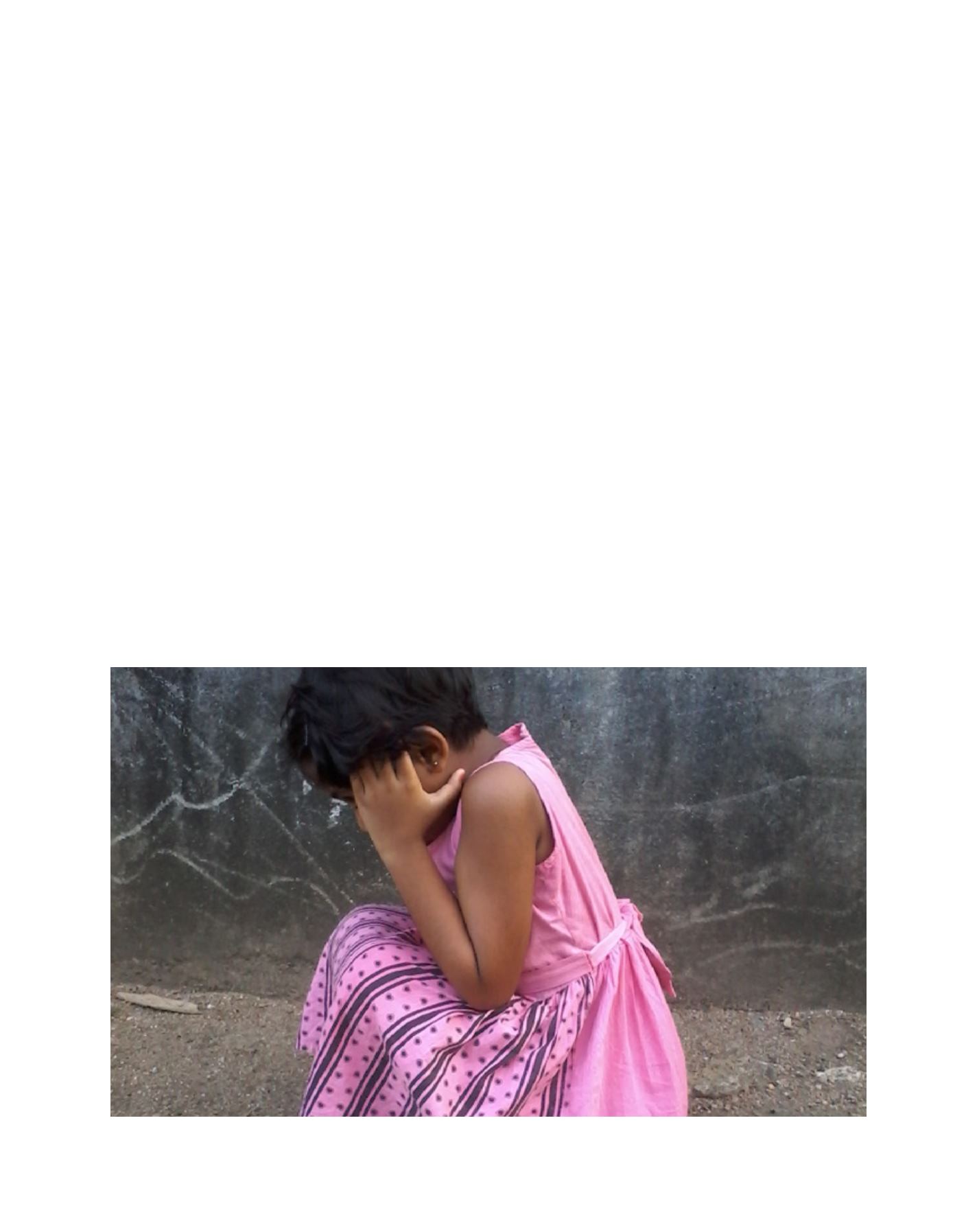
Many children are afraid to come forward and speak out about abuse
Image: Prasad Thuduwage