


 30 / 74

[
] 28
A B
et ter
W
or ld
Training of professionals
It is important to focus on providing state of the art multi-
disciplinary training for professionals dealing with cases
of abuse. The NFSP therefore set out to become one of the
leading institutions in the country to provide this training.
Courses are offered for medical professionals, mental health
professionals, social workers and law enforcement officials
on how to deal with cases of child abuse and neglect. There
are also and multidisciplinary courses. The aim is to build
the capacity of professionals from different disciplines and
increase their knowledge and skills in this field. The courses
also allow for better detection of cases, the lack of which can
often be the sole reason for children enduring abuse or living
under dire circumstances due to neglect.
Nationwide evidence based prevention programmes
Building on the training initiative, it seemed vital to provide
training courses, not only to professionals dealing with cases
of abuse, but to the victims themselves who had endured
abuse as part of a rehabilitation programme. 2016 marked
the first provision of this training in collaboration with
the British Council to provide the “Spring Board” women’s
empowerment training to victims of abuse. The first training
was conducted with 26 women who were either self-referred
or referred from shelters. Currently, the NFSP is working on
a Train the Trainer course and will graduate trainees who
will become certified in offering this Spring Board training
course in order to help the biggest number of victims on their
journey of recovery and self-betterment.
Parenting programmes
The Mother and Child Education Program (MOCEP) is
an early childhood development parenting education
programme for caregivers with children between the ages of
three and nine. MOCEP was initiated by The Mother Child
Education Foundation (AÇEV) in Turkey with the aim of
equipping mothers with skills to enhance their parent-
ing styles. The long term effect of this training will be the
reduction of unnecessary hospital admissions and health
conditions due to poor parenting skills. The benefits have
proved to be tangible and successful based on AÇEV’s many
years of implementing the programme over the world. Due to
its success, the NFSP adopted it as one of its national projects
and is currently carrying it out across the country.
Global consultations
The NFSP’s work in the field has transcended local outreach,
not only through conferences, but through partaking in
training workshops in the Gulf as well as making visits to the
helplines in the region. In addition, it led a regional project
on Child Maltreatment Prevention Readiness (CMPR) in all
Gulf Council Countries (GCC), in an effort to assess gaps
in the field of prevention and to ultimately develop preven-
tion programmes that are suitable for the region. The NFSP
has been invited on many occasions to global meetings to
devise international toolkits and guidelines. In many of these
meetings, the NFSP represents countries from the region and
has contributed to drafting questionnaires such as the ACE-
International Questionnaire.
The NFSP is also integral in the collection of indicators for
adolescents – an age group largely missing from data in the
Middle East. This project will pave the way for other counties
in the region to collect data on their respective adolescent
groups and contribute to global findings.
The NFSP is an example of what dedication, passion and
political support can do. The organization came to life at a
time where DV and child abuse were still considered taboo
topics. It has faced much criticism because of the nature of
its work and the sensitive matters it deals with, but persever-
ance and support have prevailed. Today children are more
aware of their rights, families are learning more about the
negative consequences of abuse and perpetrators know that
there is a governing body that will ensure they are punished
for their crimes. It is important to note the vital role played
by inter-sectoral collaboration in ensuring a multidiscipli-
nary approach to combating violence on a national level. It is
also important to reference partnerships on an international
level, and how beneficial it is to share knowledge and best
practices to help bridge gaps and provide services of high
standards. The issue of CM is one that affects us all, in every
corner in the world, and we are all jointly responsible to
provide children with healthy and safe homes to contribute
to building prosperous societies.
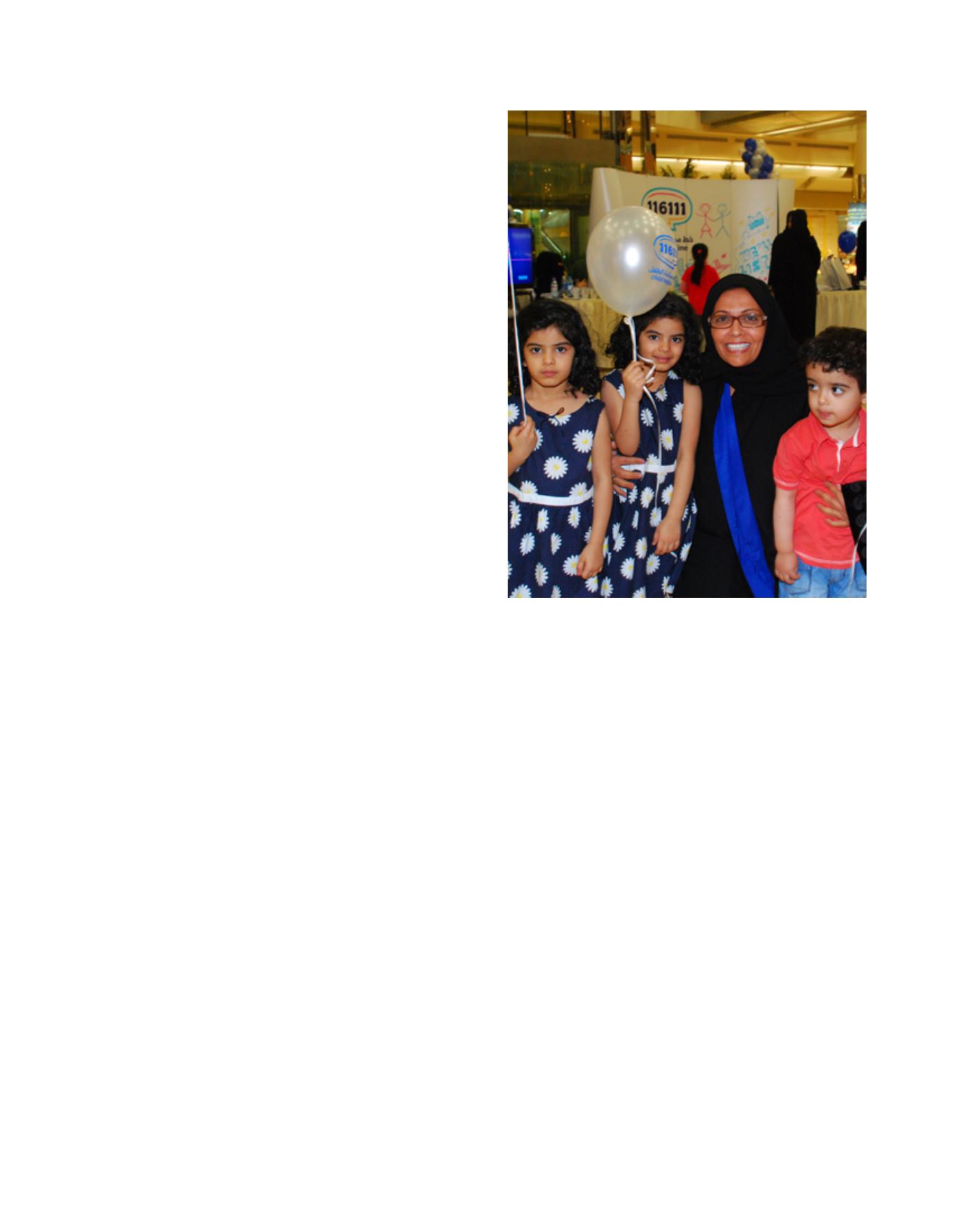
Dr Maha with children at the Saudi Child Helpline conference
Image: NFSP