


 26 / 74

[
] 24
A B
et ter
W
or ld
for the entirety of the programme made it prohibitive to many
schools. In the interest of scaling efforts and providing more
inclusive opportunity, aspects of the programmes have been
expanded and trialled. Many of the teachers requested the use
of the curriculum for use in other grade levels so ICAP has been
restructured as an online curriculumwith teacher professional
development coupled with instructional coaching and support.
Ancestry Atlas
is the digitization of an activity that occurs
early in the ICAP course. Students place markers on a world
map to indicate their birthplace and that of their parents and
grandparents on both sides. For a society such as Australia
with a high level of immigration, it was always impactful for
students to see the cultural diversity of their class encapsu-
lated in a single image. For many students it was the first
time they discovered this information about one another,
generating discussions and questions.
The objective of
Ancestry Atlas
was to begin these conver-
sations with a wider number of schools and organisations. It
allows classes to share their images by email or social media
and for classes to combine data into whole school images. It
also captures more demographic information such as reli-
gious and linguistic diversity. Accompanying the
Ancestry
Atlas
are educational materials that focus on the difference
between country, nation and state, three distinctions that
are often the source of international conflict. We reveal that
country borders are not regarded in the same way by all, and
that we form our identities in a multiplicity of ways.
This interdisciplinary approach to programme development
integrates the arts and culture into school curriculums while
employing techniques to involve the wider community to
make intergenerational connection and impact. This intercon-
nection has recently been expanded internationally to include
two new programmes that continue their commitment to
preserving and disseminating intangible cultural heritage.
The
Rescuing Heritage Arts
programmes provide funding
and support to place master musicians and dancers in villages
to teach children. The aim is to help revitalize art forms and
provide employment pathways for regional artists. The first
two locations chosen are India and Cambodia with imminent
expansion planned in both countries and new locations.
Cultural Infusion’s vision is for a world that is culturally and
socially cohesive and that values the richness of a collective
cultural heritage. CEO and founder Peter Mousaferiadis says:
“We believe culture is a way for communities to assert their
own identity. If people can express themselves they’re going
to feel good, they’re going to feel a sense of belonging. They’re
also going to feel a sense of allegiance to an empire or state
which is accepting and recognizing of their cultural identity.”
Cultural education programmes are a powerful tool for
bringing people from different backgrounds together. “A
lot of people say peace means everything; they talk about
these intangible concepts. What is peace exactly?” asks
Mousaferiadis. “We need to work at peace and the only
way you can really cultivate peace is through grassroots
initiatives, providing people something they can actively
participate in together.”
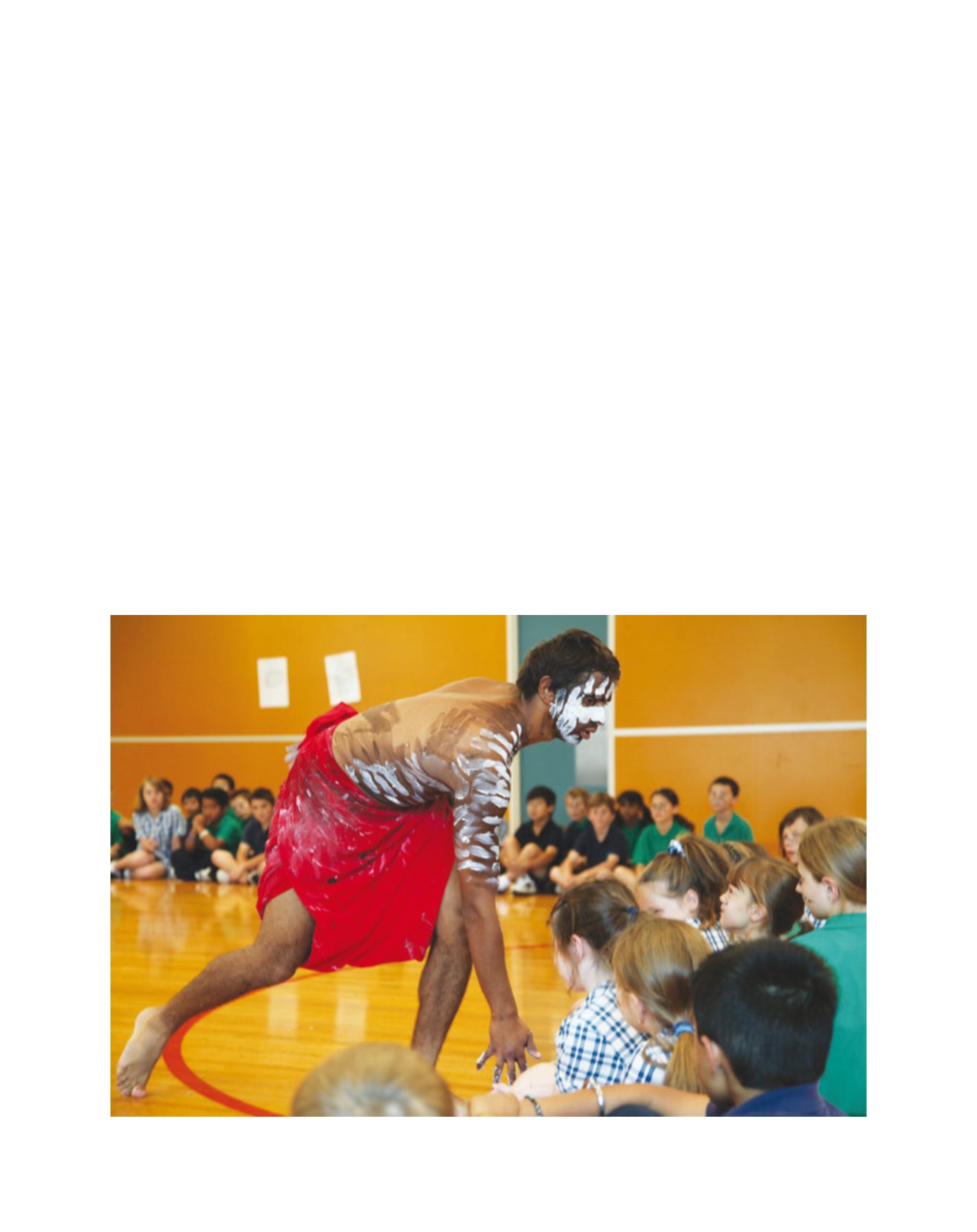
The
Aboriginal for a Day
programme immerses students in Australian indigenous culture
Image: Cultural Infusion