


 23 / 74

[
] 21
J
ust
, P
e aceful
and
I
nclusi v e
S
ocieties
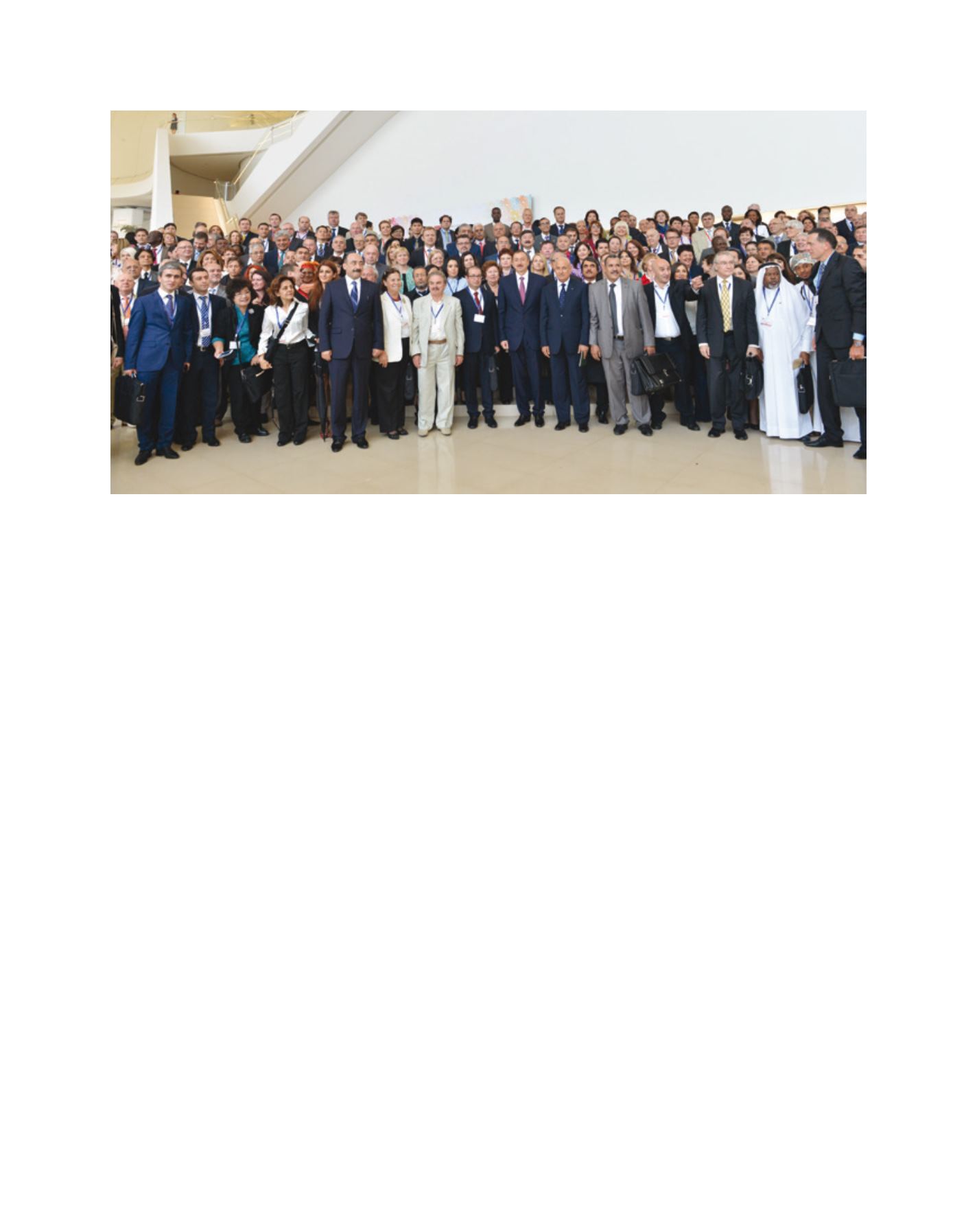
2nd World Forum on Intercultural Dialogue, 29 May–1 June 2013, Baku, Azerbaijan
and the Middle East. However, it is increasingly becoming
an issue in the Asia Pacific region where more than half of
the world’s population lives, a population that is extremely
diverse. Innovative cooperation mechanisms are in place in
that region to prevent tensions and mitigate the risk of radi-
calisation and conflict. It will be interesting to hear from the
Asia-Pacific perspective and to discuss possible exchange of
experience.
New focus: Towards a more broadly defined human security
The new and changing global political context, together
with the importance of finding practical ways to build and
reinforce trust and promote economic development, are
prerequisites of a dialogue that creates a sustainable improve-
ment in people’s quality of life. The focus on human security
has renewed attention to the consequence of both natural and
human-driven insecurity, the strong relationship between
violent conflict and poverty, as well as the importance of food
security. Overall human security is threatened by both violent
conflict and natural disasters. We are pleased to be joined by
the Food and Agriculture Organization (FAO) in this regard,
and to devote more time at the Forum to these issues.
2017: Towards a more comprehensive conceptualisation of
intercultural dialogue
At its best, dialogue is the essential toolkit, helping people
to cope with unprecedented challenges and conflicts and
the pace of change within our modern world. Dialogue can
support and help sustain peaceful relations. But, too often,
the prerequisite of dialogue to remain an open process of
exchange and respect between individuals and groups of
different cultures, points of view and aspirations, built on
a foundation of human rights and fundamental freedoms, is
overlooked and not met.
As we know, effective dialogue between people of differ-
ence and with different needs and agendas is vital for real
and sustained peace. And we appear to engage with it a lot.
On the global stage, world forums are convened to bring
together heads of governments, ministers, heads of various
international organizations, senior policy makers, cultural
professionals, goodwill ambassadors, experts, journalists,
practitioners, prominent intellectuals and activists. These
platforms enable us to take concrete actions to support diver-
sity, strengthen mutual understanding among and between
nations and communities, and raise awareness of the impor-
tance of dialogue.
Intercultural dialogue in the post-2015 era is important
due to the sheer compression of the world, as people and
their cultures have been brought into the same space with
intense speed, creating new levels and forms of human inter-
action and interdependence. Mutual respect – not the same
as mutual approval – will be crucial. Reasoned disagreement
builds stronger, more authentic and lasting relationships.
Avoiding difficult questions, such as political conflict or
differences in values, will be counterproductive, whereas
addressing them directly and with respect will build trust.
At a time when the world’s efforts are focused on sustainable
development for all, the challenges are often multidimen-
sional and interrelated, with the needs of the most vulnerable
being compounded by prejudice and stereotypes that must
be challenged holistically.
A final thought: Intercultural dialogue is important
because it allows long-term and intensive engagement with
people from other cultures. This can help people see their
own culture from a different perspective, which leads to
re-evaluating their own views and ideas. At the same time
dialogue re-introduces some of the detail – the diversity –
into our perception of others.
Image: MCT, Azerbaijan