


 21 / 74

[
] 19
J
ust
, P
e aceful
and
I
nclusi v e
S
ocieties
Looking back: World forums for intercultural dialogue
A core assumption of WFID has been the recognition that
dialogue with those who are not perceived to be from the
same cultural background is far from straightforward. In past
forums, discussions on intercultural dialogue has enabled
discussion about uneven relationships: minority-majority,
rich-poor, newcomers-residents or powerful-vulnerable.
Even within a framework of mutual respect and without an
emphasis on consensus, it has been understood that the very
platform upon which we ask others to come and engage with
each other is often, and for the most part, uneven. Whether
intentional or not, a dichotomy of advantage and disadvan-
tage cannot simply be willed away, as well-intentioned as
intercultural dialogue practitioners may be.
So, as WFID has evolved, the requirement for the field of
intercultural dialogue to draw from disciplines outside of
dialogue and communication studies and from a variety of
global, local, public and private contexts, as a way of engag-
ing with the challenges, has become more important. The
forums have also recognised and acknowledged that the
utility of intercultural dialogue, as both a concept and a
toolkit, is yet to be fully measured and assessed. As such,
applying intercultural dialogue as a strategy for managing
conflict in an increasingly globalised and connected world
still requires much planning and consideration.
As diversity and the consequences of global conflicts have
become more diffuse, strategies for cultural relationships
have developed and spread. New experiences of cultural
engagement in all walks of life have to be crafted to help us to
cope with what is now a permanently diverse and connected
world. Culture connects people of difference, and connection
enables encounter and exchange. By enabling people to live
together peacefully and constructively in a multi-cultured
world, with a sense of global community and belonging,
dialogue between and within cultures can become a power-
ful antidote to rejection and violence.
The WFID platform is a unique experience because it
ensures, by its design and implementation, that key stake-
holders – who might be referred to as the global connectors
– are engaged. The presence of Ministers of Culture in
Baku is also a great asset, and many of these by participat-
ing actively in the break-out discussions, give speakers and
participants an opportunity for interaction. WFID reflects
also that many participants, from all parts of the world, are
developing meaningful projects to promote intercultural
dialogue and diversity. WFID encourages enables many of
these to be shared and showcased during the Forum.
2017: The Fourth World Forum on Intercultural Dialogue
After three successful editions that mobilised major organ-
izations and individuals involved in the promotion of
intercultural dialogue and diversity, the fourth edition of the
Baku Forum is an important step forward.
It builds on the accomplishments of the previous
editions, and will be an opportunity to deepen the reflec-
tions and to feature new ideas and experiences. It takes into
account the new political context in many countries around
the world, with the rise of populism and polarisation and
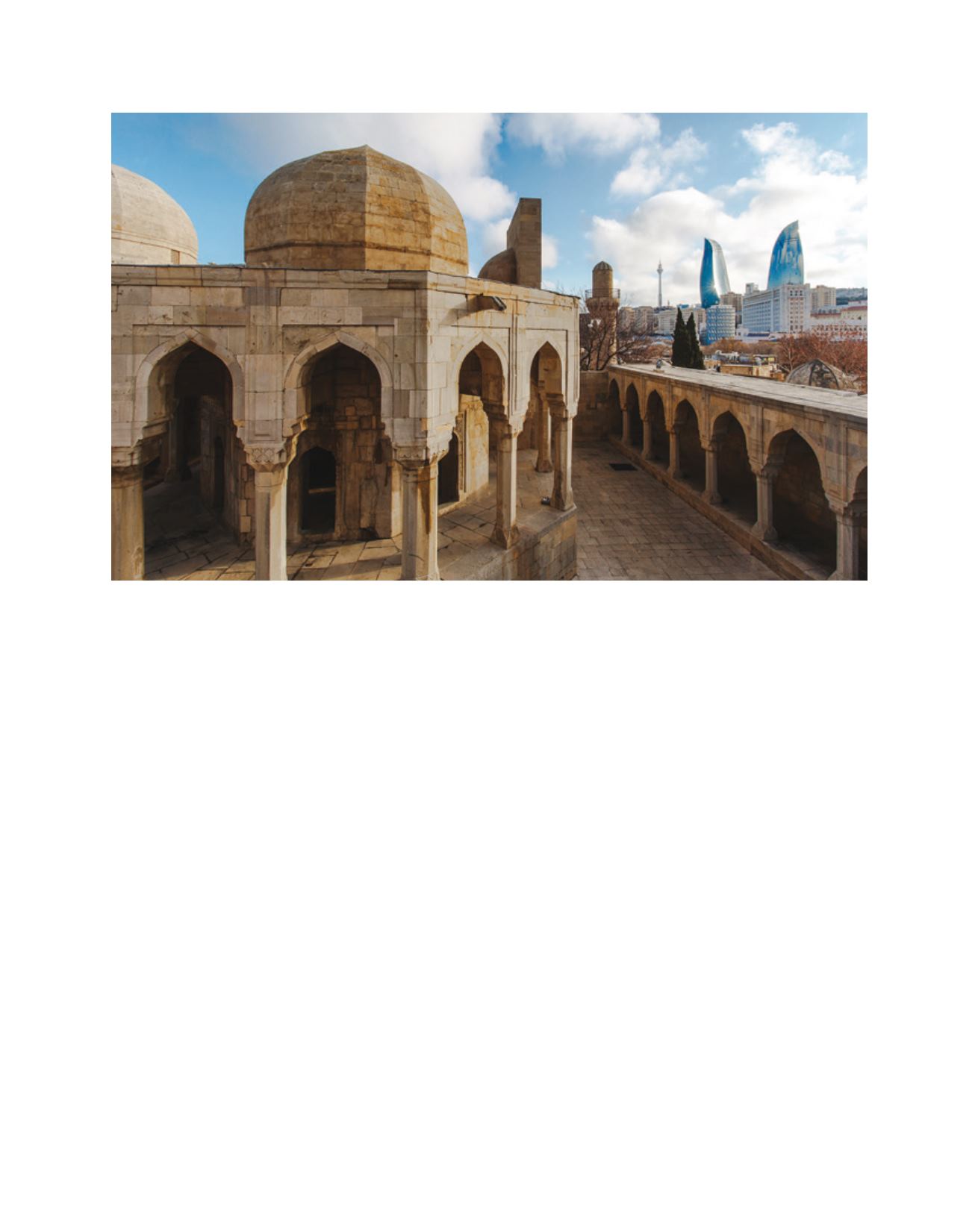
The Old City of Baku, Azerbaijan
Image: MCT, Azerbaijan