


 25 / 74

[
] 23
J
ust
, P
e aceful
and
I
nclusi v e
S
ocieties
Impact Awards, and Highly Commended at the Australia and
New Zealand Internet Awards (ANZIAs) in 2012 and 2013.
Patricia Shehan Campbell, an academic committed to the
importance of showing the music of the world in schools
says: “In three studies of children in the upper elementary
school grades, the student’s learning of musical culture and
context resulted in improved attitudes toward music and
people of Chinese culture, Native American Indian culture,
and a spectrum of other cultures that were previously unfa-
miliar to them.”
Cultural Infusion’s approach to children’s education has
always leveraged the power of this type of discovery with an
integrative and interdisciplinary approach to education. In
Discovering Diversity
and
Sound Infusion,
music and perfor-
mance opens the door to conversations and inquiry around
the history, customs, beliefs and practices of other cultures.
To deepen the learning impact of the
Discovering Diversity
programmes, an easy to implement curriculum tool was
created that could be part of preparatory and follow up lessons
that would expand intercultural understanding within the
student’s curriculum. The
Joko’s World
suite of learning apps
for mobile devices is the result of that development.
The first programmes were virtual instrument apps that
leveraged the kinesthetic power of touchscreen devices.
Joko’s
Flute
,
Joko’s Tambourine
and
Joko’s Balafon
allow students to
tap, shake and blow on their devices while playing games
that incrementally teach folk songs and rhythms from a
multitude of cultures.
The significance of these songs and instruments are
connected to history and social studies through our
interactive guidebooks and accompanying lesson plans,
contextualizing them within each culture. This has been
expanded further with
Joko’s World of Instruments
which
teaches students about 100 instruments from around the
world from the accordion to the zither. The use of musical
instruments as a focal point provides a useful hub around
which many aspects of cultures and civilizations revolve.
The range of learning apps has been extended to include
Joko’s Splatfest
which leads students through cultural cele-
brations around the world, and the geography game,
Planet
, which turns the world map into a puzzle, helping to
build knowledge of our planet to provide a context for every-
thing learnt. The cultural significance of landmarks, flags and
cultural practices are tied to the significance of place. The
linking of people to place is further explored within another
learning activity, the
Ancestry Atlas
which allows organiza-
tions to map their linguistic, national and religious diversity.
Another development is the Intercultural Citizenship
Ambassador Program (ICAP) which is instructor-led over
16 sessions and guides students through conflict resolution
communication, providing the opportunity to learn about
their own and one another’s culture, including empathy-build-
ing exercises and leadership development. One experiential
activity places students within the context of needing to
leave their home and seek refuge in another place, a powerful
method for developing children’s perspective-taking potential.
ICAP incorporates leadership-building by guiding
students in arranging school-wide cultural celebrations that
involve a wider community. The culminating celebration
involves parents, local community leaders such as clerics
from a diverse range of religions, and performers from
the
Discovering Diversity
programme. In reviewing ICAP,
Mr B. Dellal OAM, executive director of the Australian
Multicultural Foundation commented: “I am pleased to see
such professional and competent initiatives. Programmes
of this sort serve to educate students in the intricacies of
cultural diversity and, of course, the importance of respect
and acceptance of all cultures.”
14 year old ICAP participant, Isabella of Upwey High
School said: “I would recommend the ICAP programme to
other students because most students, like me, before the
ICAP programme don’t know much about the thousands of
cultures living right under our noses.” 13 year old Megan
from Upwey remarked: “I think it is important to interact
with other cultures because it shows us how others live and
it reduces conflict.”
The ICAP programme has been successfully implemented
numerous times, but the cost of training and placing facilitators
The
Kinder Dreaming
programme gives pre-school students a new
understanding of the rich traditions of Australia’s first inhabitants
Cultural Infusion’s
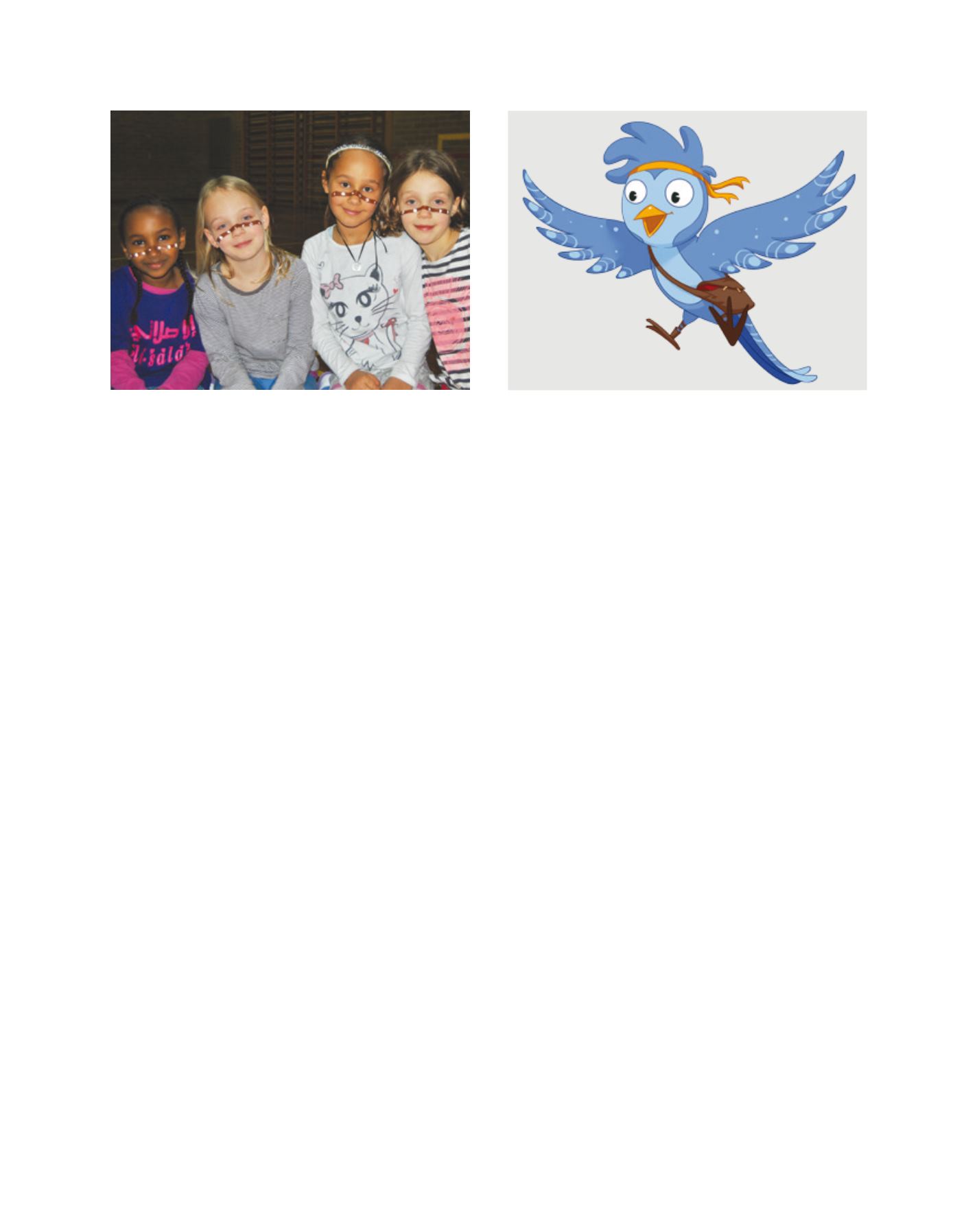
Joko’s World
comprises interactive educational apps that
blend music, geography and culture in a unique way
Image: Cultural Infusion
Image: Cultural Infusion